Solar Alert News

  • Earth Narrowly Escapes Devastating Solar Storm: A Wake-Up Call for Infrastructure Protection

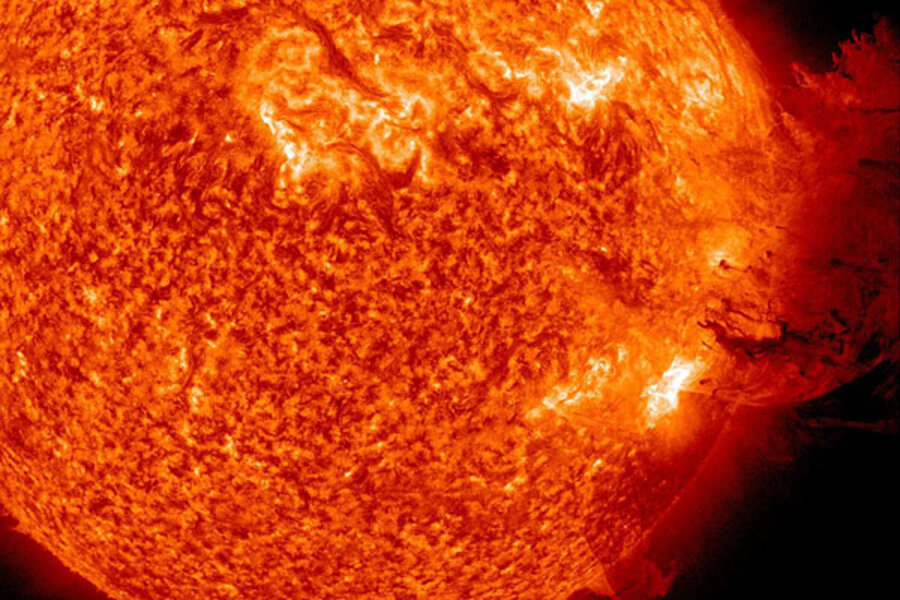
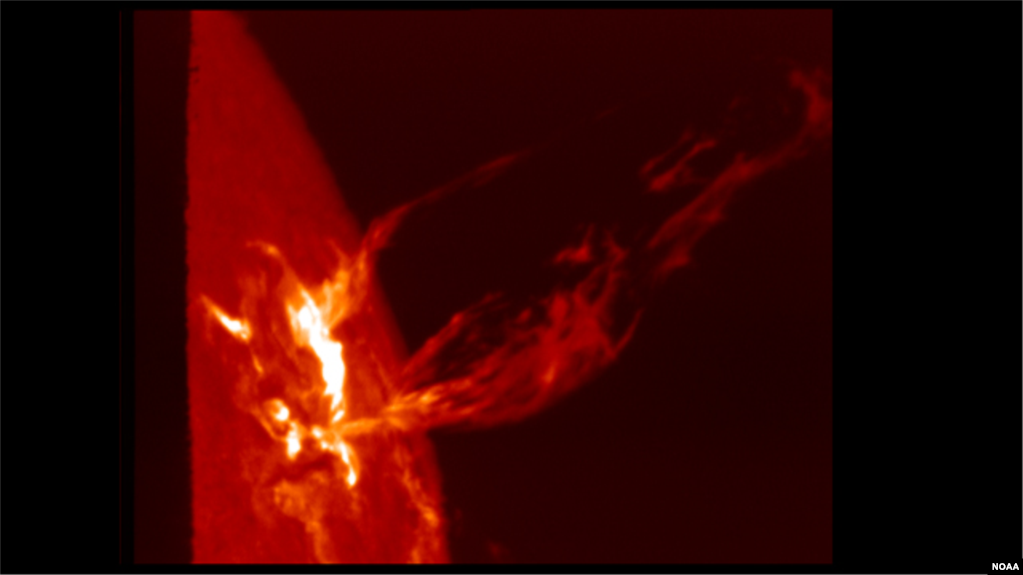
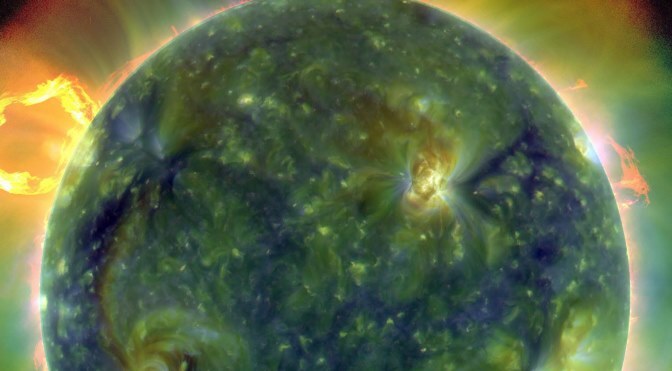
    In July 2013, Earth narrowly avoided a catastrophic solar storm when a massive coronal mass ejection (CME) erupted from the Sun, missing our planet by a mere nine days. Had the CME occurred earlier, it could have struck Earth directly, potentially disabling power grids, communication networks, and GPS systems, and causing widespread technological disruptions. This near-miss highlights the vulnerability of modern infrastructure to solar events and underscores the importance of developing protective measures against future solar storms.

    Source: https://www.dailymail.co.uk/sciencetech/article-2382527/A-near-miss-Earth-Devastating-electromagnetic-pulses-knocked-power-cars-phones-occured-weeks-ago.html?ito=feeds-newsxml&fbclid=IwY2xjawHNFzpleHRuA2FlbQIxMAABHSvX7nL6z5ElW0esK5go8QOae1smAFRLyV7iJ-RKhOjLIZDte7WbzPbCLQ_aem_YPuIw3aaT_2ewSAQhMd3Ow

  • Impending Solar Storms Pose Significant Threat to Modern Infrastructure

    As the Sun approaches the peak of its 11-year cycle, scientists warn of the increased likelihood of powerful solar storms that could disrupt Earth’s infrastructure. The 1859 Carrington Event, the most severe geomagnetic storm on record, caused global telegraph failures. A similar event today could incapacitate power grids, satellites, and communication systems, potentially leaving 20 to 40 million people without electricity for up to two years and resulting in economic losses between $0.6 trillion to $2.6 trillion. North America’s geological features and aging infrastructure make it particularly vulnerable. Improved computer models are being developed to better predict solar weather and mitigate these risks.

    Source: https://www.voanews.com/a/major-solar-storm-could-be-heading-for-earth/1706884.html?fbclid=IwY2xjawHNFitleHRuA2FlbQIxMAABHdWfov2JfFmZtUUnEqLu7tgjvEJW5VAVg7V9xgnmDSDDlwDwHwEIEjvp5w_aem_rTM0itVeSRNVYvg68nmCAA

  • Understanding the Risks: How Solar Storms Could Disrupt Modern Infrastructure

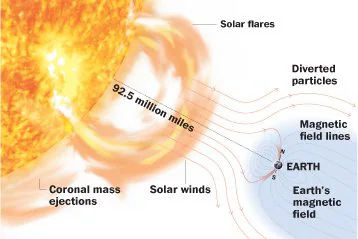
    This article discusses the potential threats posed by space weather events, particularly solar storms, to Earth’s infrastructure. It highlights historical incidents, such as the 1859 Carrington Event, which caused widespread telegraph failures, and emphasizes that a similar event today could disrupt power grids, communication systems, and other critical technologies. The piece underscores the importance of preparedness and the development of resilient systems to mitigate the impacts of severe space weather.

    Source: https://www.washingtonpost.com/news/wonk/wp/2013/07/13/when-space-weather-attacks/?fbclid=IwY2xjawHNFM1leHRuA2FlbQIxMAABHZnmKUowznRDaMPUnebYu1a2DqhkZTEbgIIjNFf5AM0VP7TkN8rfmGmBZA_aem_Efse20xGE_-iha1GaxVXxQ

  • Solar Storms Pose Critical Threat to U.S. Infrastructure: Assessing the Risks and Preparedness

    A report highlights the vulnerability of the U.S. power grid to solar storms, particularly coronal mass ejections (CMEs). An event similar to the 1859 Carrington Event could cripple modern infrastructure, leading to power outages lasting up to two years in some areas. The economic impact of such a disaster is estimated at $2.6 trillion. The report emphasizes the need for improved preparedness and infrastructure resilience to mitigate the potential effects of severe space weather events. 

    Source: https://www.extremetech.com/extreme/161301-space-invasion-solar-storms-pose-critical-threat-to-us-infrastructure?fbclid=IwY2xjawHNFBlleHRuA2FlbQIxMQABHVkD2gm5QE-xF5kYi7ojibthvUS_NFQz0Icr3u9znoyz9Nrjy1CVBbY2wg_aem_xOYr5jkbuvtYOjTGtGpOIw

  • Solar Storm Warnings: Protecting Power Grids and Technology with Space Weather Forecasting

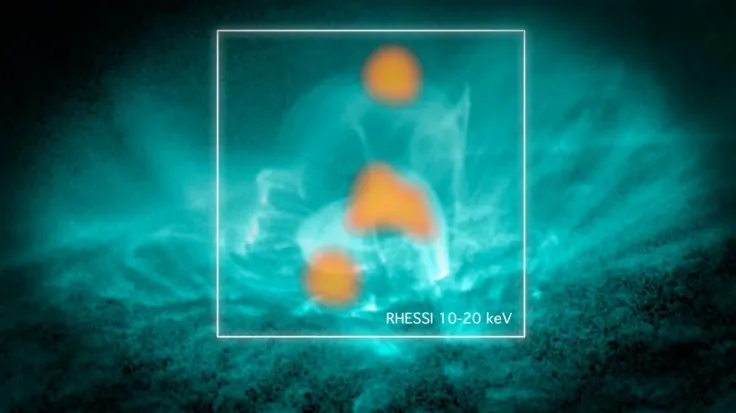
    Meteorologist Jen Carfagno interviews Brent Gordon from the Space Weather Prediction Center, which monitors solar activity and issues warnings about potential solar storms. These storms, if severe, could lead to widespread power outages and disrupt essential technologies such as satellite communications and navigation systems. The discussion highlights the importance of preparedness and the role of space weather forecasting in protecting infrastructure.

    Source: https://www.ibtimes.com/nasa-spacecraft-captures-magnetic-reconnection-action-during-recent-solar-flare-video-1346491

  • Solar Storm Warnings: Protecting Power Grids and Technology with Space Weather Forecasting

    Meteorologist Jen Carfagno interviews Brent Gordon from the Space Weather Prediction Center, which monitors solar activity and issues warnings about potential solar storms. These storms, if severe, could lead to widespread power outages and disrupt essential technologies such as satellite communications and navigation systems. The discussion highlights the importance of preparedness and the role of space weather forecasting in protecting infrastructure.

  • The Carrington Event: The Largest Solar Storm in Recorded History

    On September 1, 1859, British astronomer Richard Carrington observed the largest solar flare ever recorded. The resulting plasma cloud reached Earth in just 18 hours, creating dazzling auroras visible even at tropical latitudes like Cuba, the Bahamas, and Jamaica. These lights were so bright that newspapers could be read at night. Telegraph systems worldwide were severely disrupted, with sparks shocking operators, setting paper on fire, and enabling message transmission even without power. A similar solar storm today could cause billions of dollars in damage to satellites, power grids, and communication systems. The Carrington Event remains the most intense geomagnetic storm in recorded history.

  • Increased Solar Activity in 2013 Raises Concerns Over Potential Disruptions to Earth’s Infrastructure

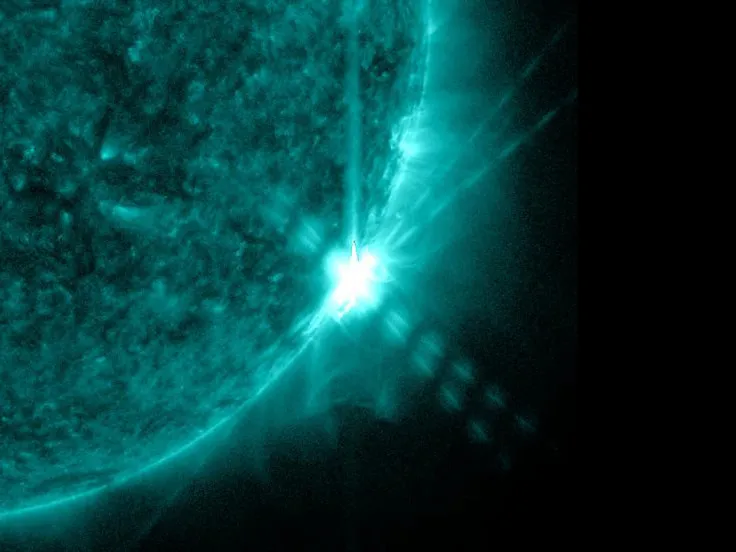
    In 2013, the Sun reached the peak of its 11-year activity cycle, known as the solar maximum, leading to an increase in solar flares. These flares, particularly the more powerful X-class flares, have the potential to disrupt Earth’s atmosphere, affecting communication systems and power grids. Historically, significant solar events have caused technological disruptions, such as the 1859 Carrington Event, which impacted telegraph services, and the 1989 geomagnetic storm that led to a nine-hour power outage in Canada. As solar activity intensifies, scientists emphasize the importance of monitoring space weather to mitigate potential impacts on modern infrastructure.

    Source: https://www.ibtimes.com/solar-activity-cycle-peaks-2013-more-solar-flares-expected-later-year-1302041

  • Solar Variability’s Subtle Yet Significant Impact on Earth’s Climate

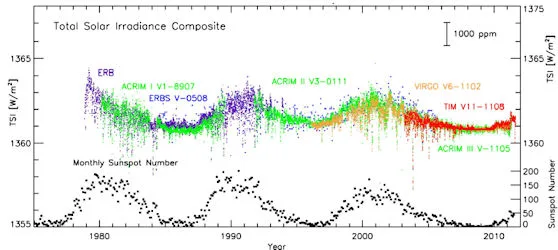
    This article discusses how even slight variations in the Sun’s energy output can significantly impact Earth’s climate. While the Sun’s luminosity changes by only about 0.1% over its 11-year cycle, these fluctuations can influence atmospheric conditions, particularly in the stratosphere, and alter weather patterns. The National Research Council emphasizes the importance of understanding the Sun’s variability to improve climate models and predictions.

    Source: https://science.nasa.gov/science-news/science-at-nasa/2013/08jan_sunclimate/?fbclid=IwY2xjawHL7DJleHRuA2FlbQIxMAABHSvX7nL6z5ElW0esK5go8QOae1smAFRLyV7iJ-RKhOjLIZDte7WbzPbCLQ_aem_YPuIw3aaT_2ewSAQhMd3Ow

  • Catastrophic Solar Storms Could Cause Prolonged Power Outages in the UK and US

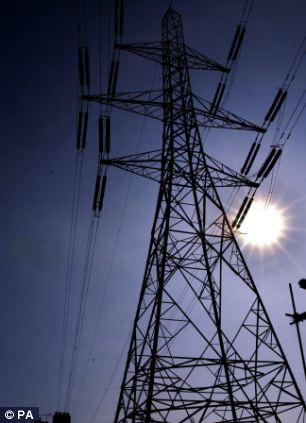
    A report by Lloyd’s of London and Atmospheric and Environmental Research (AER) warns that a catastrophic solar storm could leave the UK and the US without electricity for days or even months. Such an event could damage critical infrastructure, including transformers, leading to prolonged power outages due to the time required to manufacture and replace these components. The report emphasizes the importance of preparedness and resilience in mitigating the potential impacts of severe space weather events.

    Source: https://www.telegraph.co.uk/technology/news/10103492/Solar-storm-could-leave-Britain-without-power-for-months.html?fbclid=IwY2xjawHL6vZleHRuA2FlbQIxMAABHZnmKUowznRDaMPUnebYu1a2DqhkZTEbgIIjNFf5AM0VP7TkN8rfmGmBZA_aem_Efse20xGE_-iha1GaxVXxQ#disqus_thread

←Previous Page
1 … 5 6 7 8 9 … 11
Next Page→